O
North–south spine
Oklahoma Line
Collinsville, Owasso and central Tulsa
- Concept length
- 38.3 km
- Infrastructure estimate
- $250–550M
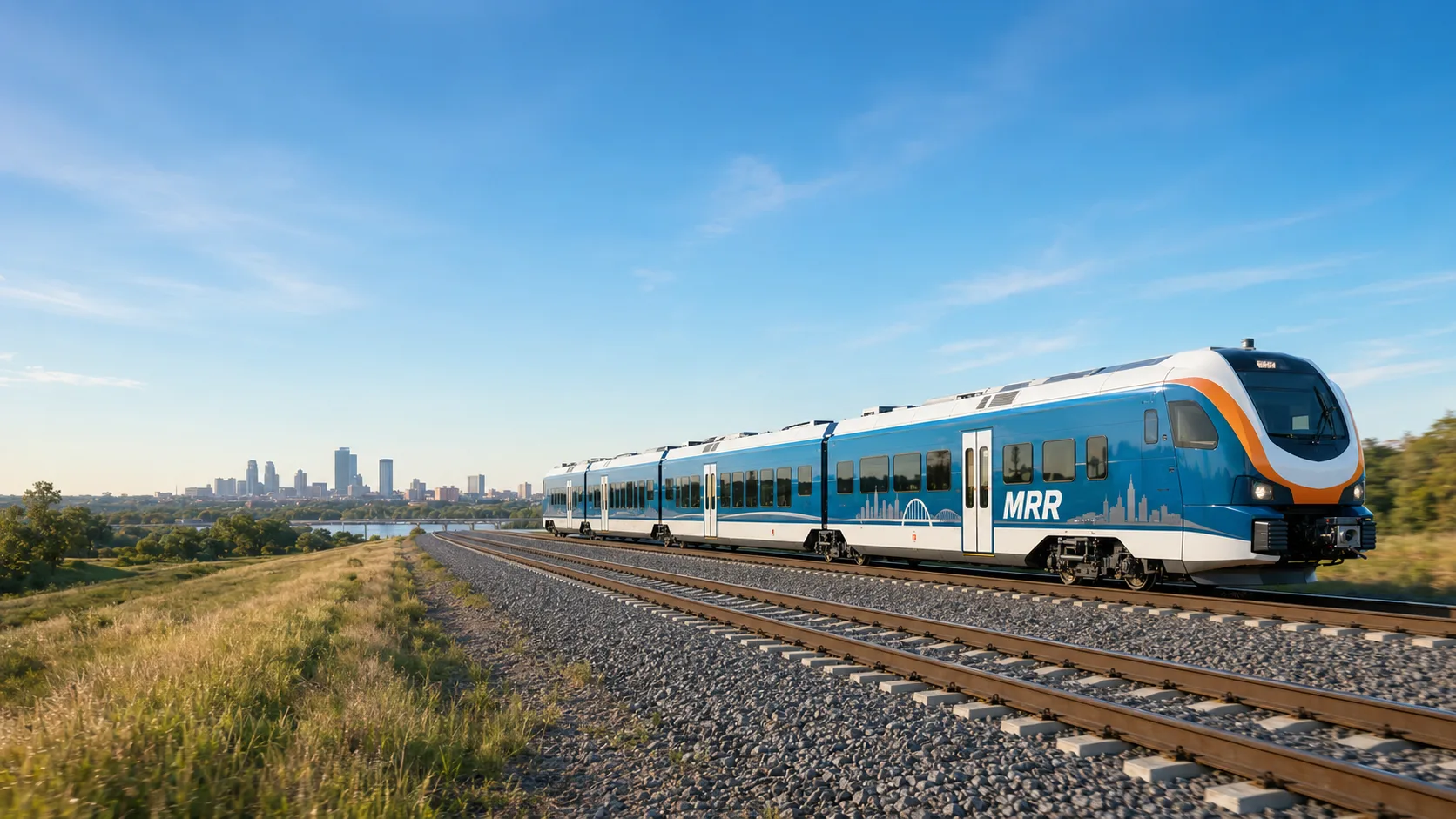
Tulsa regional mobility concept · July 2026
Three frequent regional lines connecting Collinsville, Owasso, the airport, central Tulsa and Broken Arrow—using the rail corridors already here.
The proposed network
Explore the concept by line and station. The regional view uses the available Oklahoma Line points; the two branch alignments remain illustrative until the full KML is restored.
Concept information is drawn from the July 2026 MRR planning brief. Detailed alignments, ownership, costs and operating assumptions require independent engineering and agency review.
Collinsville, Owasso and central Tulsa
East-side communities and direct airport access
Broken Arrow and southeast Tulsa
The service idea
MRR is an all-stop metro: every train serves every station, every seven minutes. Four-car Stadler FLIRT DMUs pair frequent service with comfortable, intercity-style interiors.
Planned all-stop passenger service interval across the operating day.
Stadler FLIRT DMU trains with intercity-style interiors.
Target top speed on rebuilt, passenger-ready track.
Temporal separation keeps daytime paths passenger-first.
The station standard
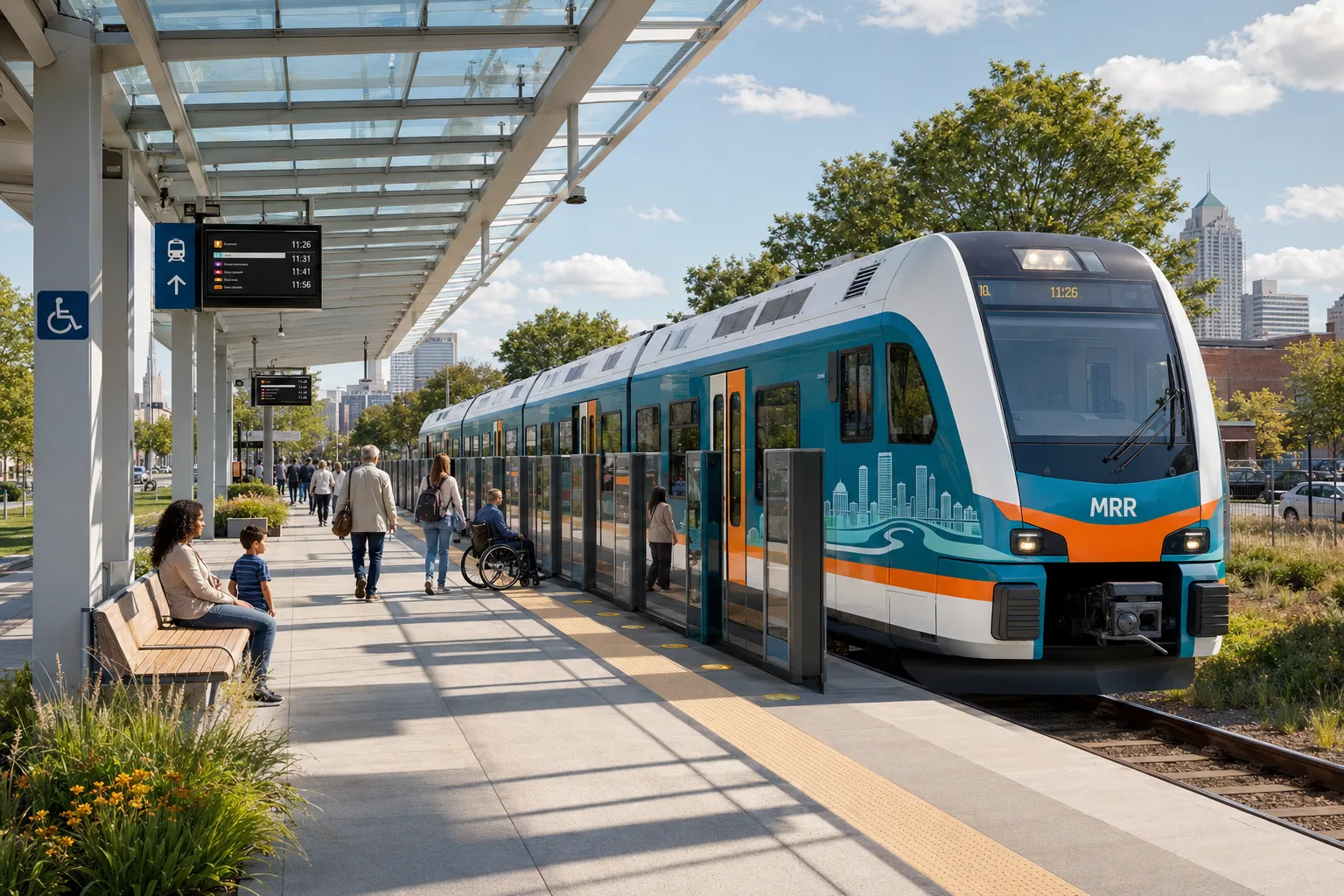
Every station is intended to feel open, calm and unmistakably public: generous daylight, level boarding, real-time information and serious Oklahoma weather protection.
A defining safety and comfort goal, subject to final freight-clearance and vehicle engineering.
Level boarding, tactile guidance and accessible paths from street to train.
Safe bicycle access, feeder transit, shaded waiting and clear wayfinding.
Alertness Station
Alertness is the MRR airport gateway. Passengers connect between rail and Tulsa International Airport; it is not a rail-to-rail interchange.
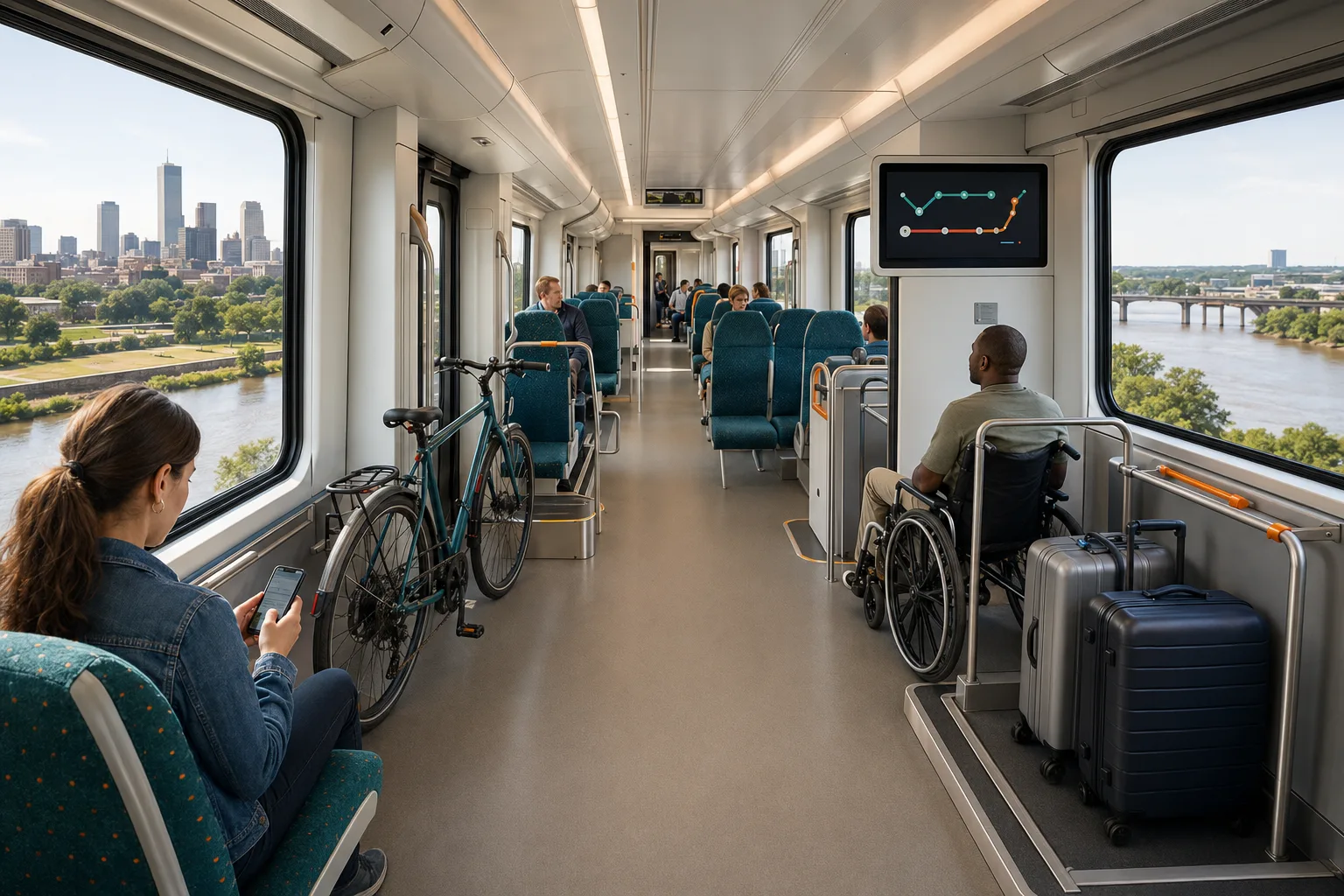 Concept interior · MRR four-car Stadler FLIRT DMU
The passenger experience
MRR uses four-car Stadler FLIRT diesel multiple units for its all-stop, seven-minute metro service. Each train is configured with an intercity-style interior for comfortable regional journeys.
Initial service is diesel. Future electrification is an infrastructure option—not a promise that the first fleet can be converted.
Building MRR
MRR starts with freight rail corridors, then rebuilds them for frequent passenger service. That lowers the amount of new right-of-way, but it does not make the engineering small.
Starting condition
MRR concept
Early order of magnitude
Combined corridor infrastructure estimate from the source plan. It is not a project budget and does not include the full cost of stations, vehicles, land, electrification or contingency.
Continuous rail, ties, ballast, drainage and double-track capacity.
Modern signaling, Positive Train Control and an interlining plan.
Safer gates, medians, selective closures and bridge or culvert work.
Clearances and provisions that do not block later electrification.
Growth around stations
MRR treats station land as part of the transportation plan: homes, local services and safe walking connections close enough that the train becomes the obvious first choice.
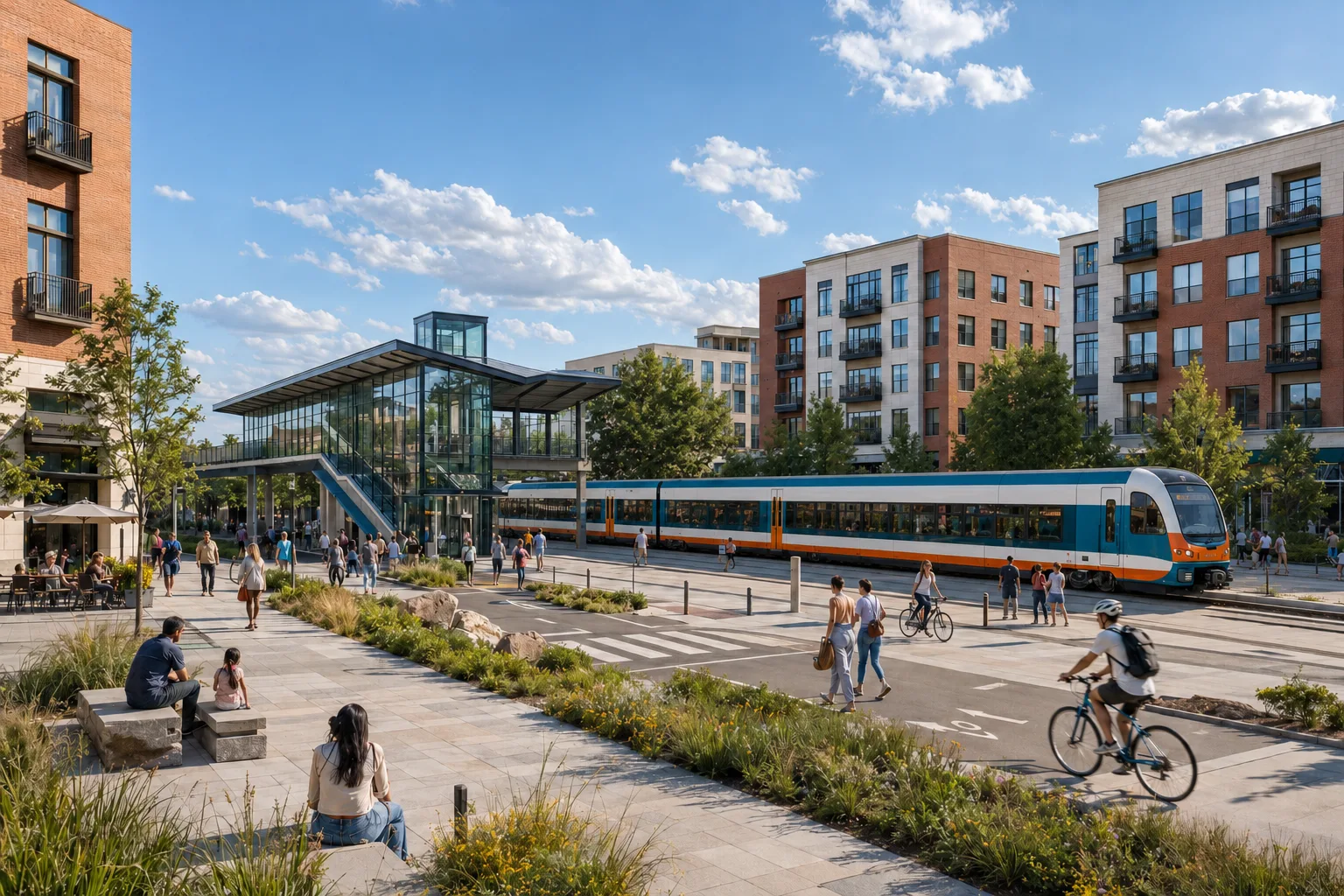
MRR is intended to create
A practical sequence
This is a planning sequence, not an adopted schedule.
Verify
Prove
Deliver
Connect